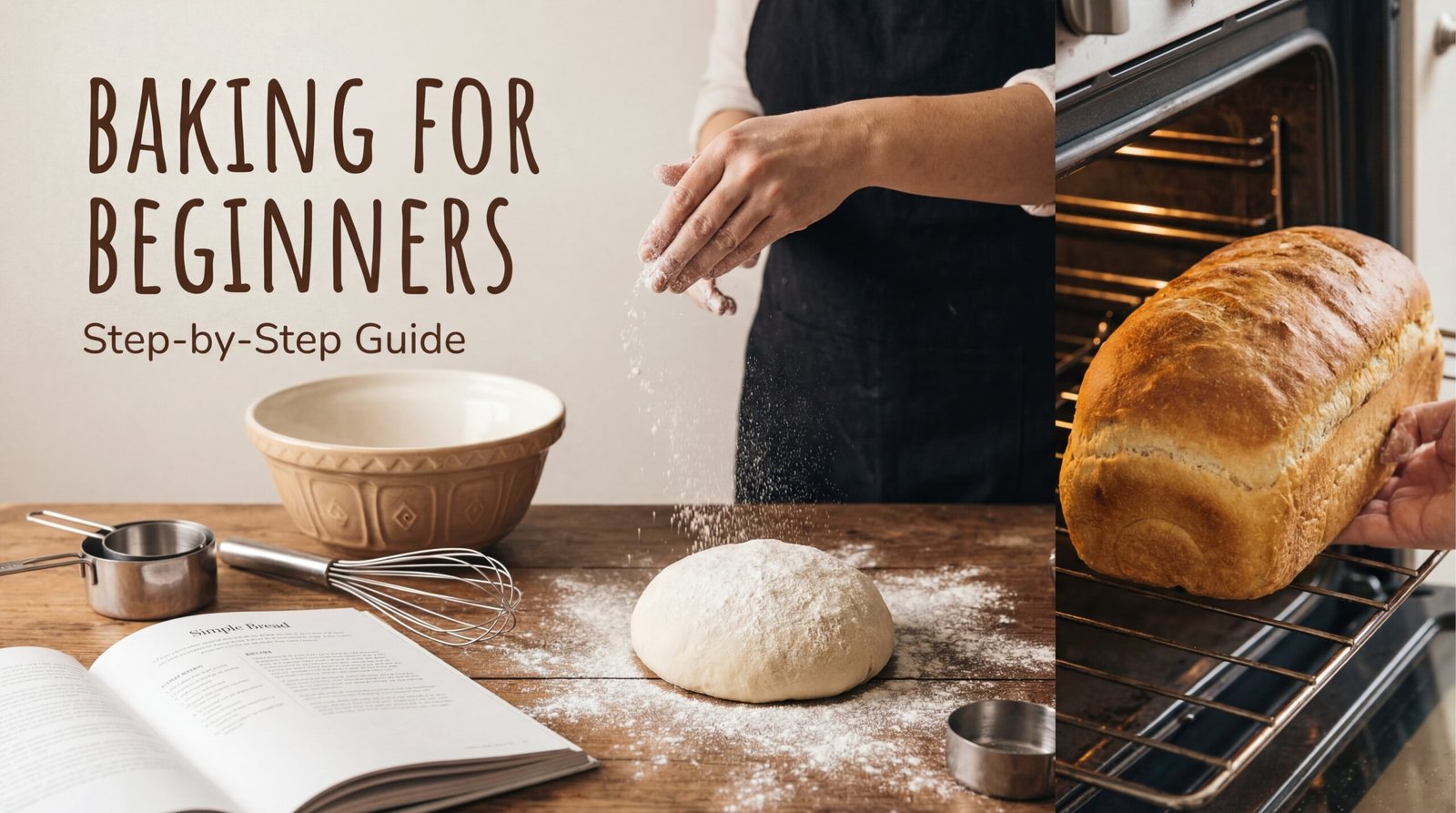
People love to say baking is “easy” or “just follow the recipe.” That advice sounds nice and is wildly unhelpful. Baking is simple, yes—but it’s also precise, emotional, occasionally humbling, and very honest. Cooking forgives you. Baking absolutely does not.
This guide is for people who want to bake but feel intimidated. For people who don’t own fancy tools, don’t know what “fold gently” means, and are tired of Googling “why did my cake sink.”
We’ll go step by step. No rush. No judgment. Just real baking, explained like a human explaining it to another human.
First, let’s clear up a myth that scares beginners
You do not need to be “good at math” to bake.
You need:
- Attention
- Patience
- Willingness to follow instructions
- Acceptance that your first few bakes might be ugly
That’s it.
Baking isn’t talent. It’s muscle memory and understanding why things work.
What baking actually is (in plain language)
Cooking is art. Baking is science with snacks.
When you bake, you’re:
- Activating proteins
- Trapping air
- Controlling moisture
- Using heat to set structure
That’s why tiny changes matter. An extra egg. Too much flour. Oven too hot. Suddenly your cookies spread like pancakes or your bread feels like a brick.
This isn’t to scare you. It’s to explain why steps matter.
Step 1: Start with the right beginner mindset
If you remember nothing else, remember this:
Baking punishes improvisation at the beginning.
Later, once you understand basics, you can experiment. As a beginner, don’t freestyle.
That means:
- Don’t substitute ingredients randomly
- Don’t eyeball measurements
- Don’t rush steps
- Don’t skip “boring” instructions
Your future self will thank you.
Step 2: Understand basic baking ingredients (without chemistry lectures)
You don’t need 30 ingredients to start baking. You need to understand what the common ones do.
Flour: the structure builder
Flour gives baked goods their body.
For beginners:
- Use all-purpose flour
- Don’t pack it tightly into measuring cups
- Too much flour = dry, dense results
Most baking disasters start with excess flour.
Sugar: not just for sweetness
Sugar:
- Sweetens
- Adds moisture
- Helps browning
- Affects texture
White sugar makes things crisp.
Brown sugar adds moisture and chewiness.
They’re not always interchangeable. Recipes choose sugar types for a reason.
Eggs: the glue
Eggs:
- Bind ingredients
- Add moisture
- Help structure
- Contribute to rise
Room-temperature eggs mix better. Cold eggs can mess with texture.
Annoying detail? Yes. Important? Also yes.
Fat (butter or oil): flavor and tenderness
Butter:
- Adds flavor
- Creates flaky textures
- Needs proper temperature (cold vs soft matters)
Oil:
- Adds moisture
- Keeps things soft longer
Don’t replace butter with oil unless the recipe says you can.
Baking powder and baking soda: the lift
These are leavening agents. They make things rise.
- Baking soda needs acid to work
- Baking powder already contains acid
They are not the same thing.
Using the wrong one is how you get flat cakes or bitter taste.
Step 3: Tools you actually need (not influencer nonsense)
You don’t need a marble countertop or pastel stand mixer.
Here’s the honest beginner list:
- Measuring cups (dry + liquid if possible)
- Measuring spoons
- Mixing bowls
- Whisk
- Spatula
- Baking pan or tray
- Oven (obviously)
Optional but helpful:
- Hand mixer
- Kitchen scale
- Cooling rack
That’s it. Anything else is bonus, not requirement.
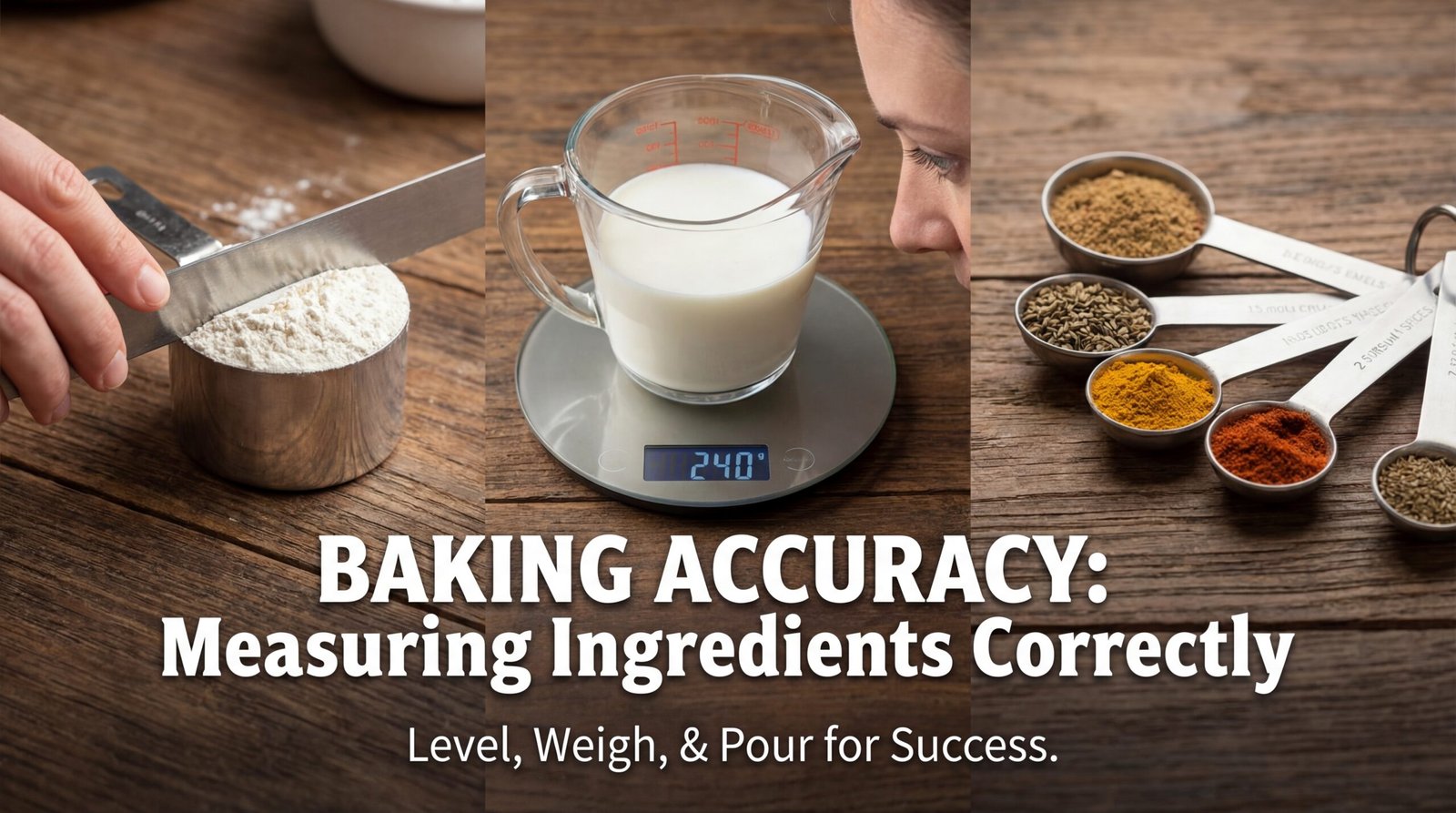
Step 4: Learn to measure properly (this matters more than talent)
Let me be blunt.
Bad measuring ruins more baked goods than bad recipes.
Dry ingredients
- Spoon flour into the cup
- Level it off with a knife
- Don’t scoop directly from the bag
Scooping packs flour. Packed flour equals too much flour.
Liquid ingredients
- Use a liquid measuring cup
- Check at eye level
- Don’t guess
Close enough is not close enough in baking.
Step 5: Read the entire recipe before you start (yes, all of it)
I know. You want to jump in.
Don’t.
Read the recipe fully before touching ingredients.
Why?
- Some steps require resting time
- Some ingredients need to be room temperature
- Oven temperature matters early
- Order of mixing is important
Skipping this step is how beginners panic halfway through.
Step 6: Preheat your oven like you mean it
Putting batter into a cold oven is a silent killer.
Always:
- Preheat the oven fully
- Give it 10–15 minutes
- Use the temperature mentioned (not “close enough”)
Baking relies on immediate heat to set structure. Late heat = collapsed cakes.
Step 7: Mixing methods beginners should know
You don’t need to master all techniques, but these three show up everywhere.
Creaming method
Used for:
- Cakes
- Cookies
You beat butter and sugar together until light and fluffy, then add eggs, then dry ingredients.
This traps air. That air helps things rise.
Rush this, and your cake will be dense.
One-bowl method
Used for:
- Muffins
- Quick breads
Wet ingredients mixed, dry ingredients added, gently combined.
Overmixing here is the enemy. Mix until just combined. Lumps are okay.
Folding
Folding means gently mixing without knocking out air.
Use a spatula. Slow movements. Be patient.
This matters for:
- Sponge cakes
- Whipped mixtures
Step 8: Baking times are guidelines, not law
Ovens lie.
Two ovens at the same temperature can behave very differently.
Use:
- Toothpick test (comes out clean or with crumbs)
- Gentle touch (springs back)
- Visual cues (golden edges, set center)
Never rely only on the timer.
Step 9: Cooling is part of baking (don’t skip it)
This part is boring and everyone rushes it.
Cooling allows:
- Structure to set
- Moisture to redistribute
- Flavors to develop
Cutting too early can ruin texture, even if baking was perfect.
Patience tastes better.
Step 10: Start with beginner-friendly recipes
Don’t start with macarons. Please.
Begin with:
- Basic cookies
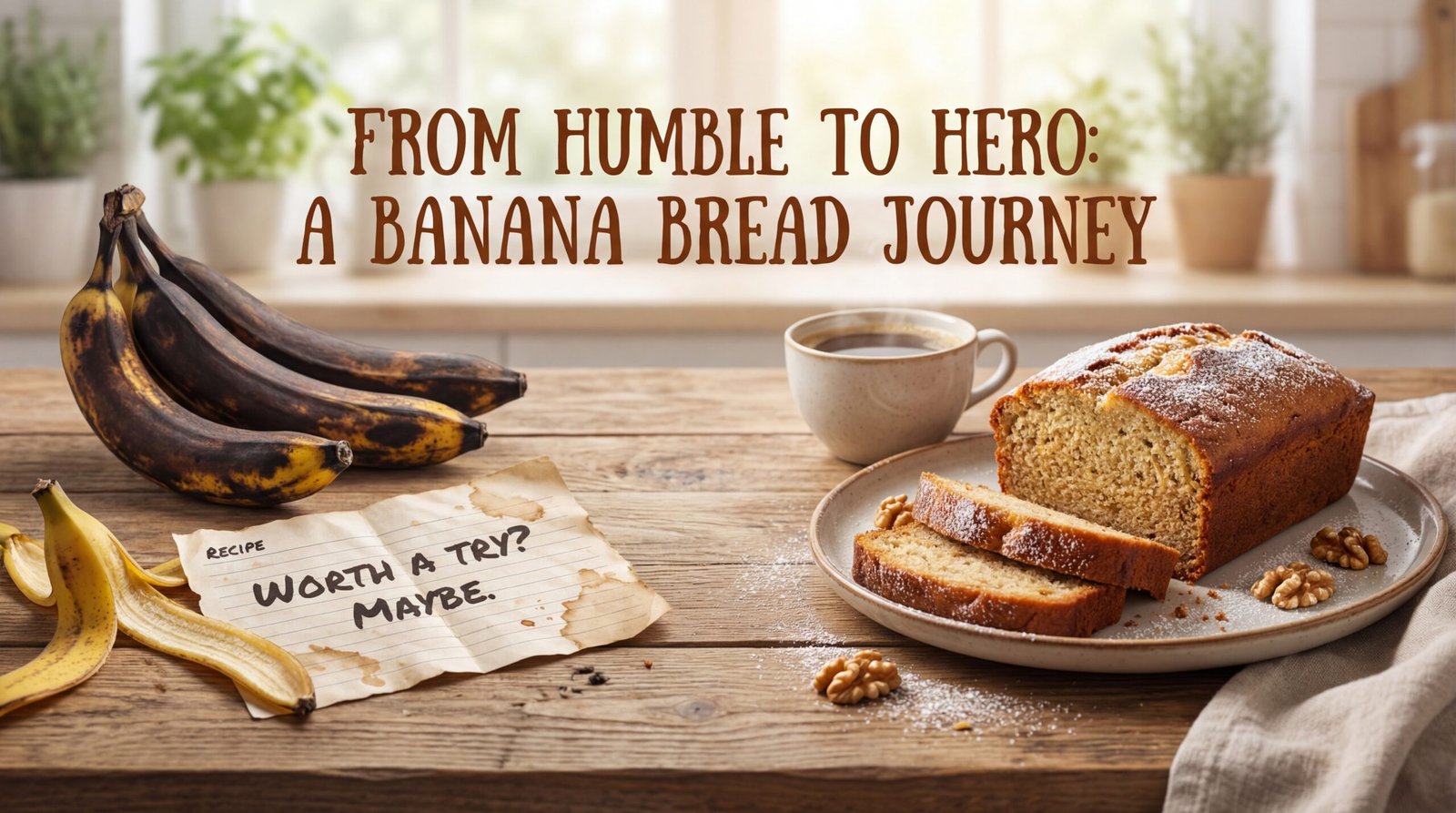
- Banana bread
- Simple muffins
- Pound cake
- Brownies
These teach fundamentals without punishing small mistakes.
Confidence grows fast when recipes cooperate.
Common beginner baking mistakes (and why they happen)
Overmixing
More mixing ≠ better result.
Overmixing develops gluten, which makes baked goods tough.
Gentle is usually better.
Ingredient substitutions without understanding
Replacing sugar with honey, flour with oats, butter with margarine…
These changes affect moisture, structure, and flavor.
Follow the recipe first. Experiment later.
Ignoring ingredient temperature
Cold butter vs soft butter matters.
Cold eggs vs room temp eggs matter.
These aren’t “fancy rules.” They’re functional.
Why baking failures are normal (and useful)
Every good baker has:
- Burnt something
- Undercooked something
- Overmixed something
- Forgotten salt
- Used baking soda instead of powder
Mistakes teach faster than success.
If your first bake fails, congratulations. You’ve officially started learning.
Baking is therapy, but also honesty
Baking reflects your attention.
If you rush, it shows.
If you’re distracted, it shows.
If you follow steps calmly, it shows.
That’s why people find baking comforting. It rewards presence.
My slightly controversial beginner advice
Don’t bake for Instagram at first.
Bake for yourself.
Ugly cookies still taste good. Crooked cakes still teach lessons. Chasing perfection too early kills joy.
Skill comes from repetition, not aesthetics.
How to know you’re improving as a beginner
You’ll notice:
- Textures improving
- Flavors balancing
- Timing getting easier
- Less panic mid-recipe
- Fewer “what went wrong?” moments
Progress in baking is quiet but satisfying.